
Real-Time Edge Platform
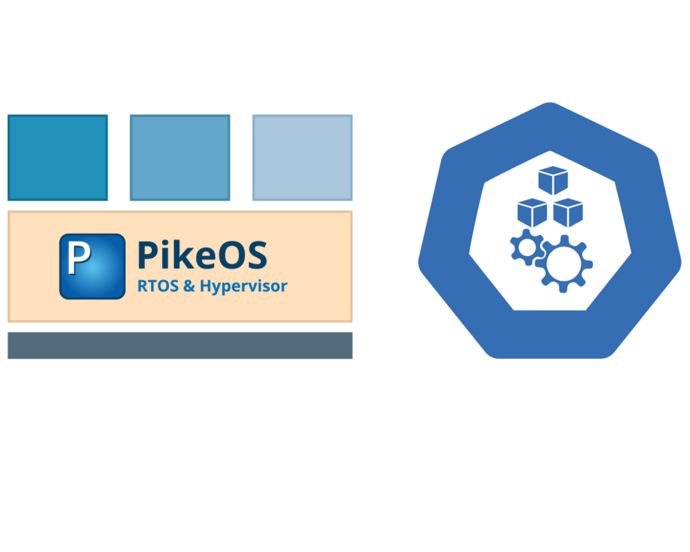
The Standard for Mixed-Criticality Orchestration
Empower your Edge infrastructure with the industry's first Safety-certified real-time operating system integrated with Kubernetes orchestration.
- Seamless Edge-to-Cloud Integration for efficient data flow
- Real-time data processing for fast decision-making
- Certified Safety & Security for critical systems
- Remote device management for centralized control
- Scalable architecture for diverse IoT ecosystems


Complex and costly Updates
Example: Industrial Automation
Factories deploy thousands of Edge devices to monitor and control production lines. When updates or Security patches are required, manually updating each device is costly and time-consuming. Without centralized management, outdated software can lead to operational inefficiencies or even Security breaches.
Security Risks: A growing Attack Surface
Example: Smart Cities
Connected traffic lights, surveillance cameras, and sensors collect vast amounts of data. However, each connected device represents a potential entry point for cyberattacks. For example, hackers could breached water treatment facilities by exploiting remote access, highlighting the risks of unsecured Edge devices.
Scaling Limitations in dynamic Environments
Example: Retail and Quick Service Restaurants (QSRs)
Retail chains are integrating AI-powered kiosks and drive-thru automation to enhance customer service. However, traditional Edge computing struggles to scale dynamically. A system designed for fixed workloads cannot easily accommodate new AI models or demand spikes without significant infrastructure changes.
Performance: Real-Time vs. Non-critical Workloads
Example: Autonomous Vehicles
Self-driving cars process vast amounts of real-time data from LiDAR, cameras, and sensors. If non-critical tasks—like software updates or logging—compete for processing power, it can delay crucial decisions, leading to Safety risks. Legacy Edge systems often lack the ability to properly prioritize workloads in these environments.


Safety
- Fulfill hard real-time requirements and underly strict time partitioning
- Segregation by means of strict resource partioning
- Certifiable to highest Safety standards:
DO-178C DAL A, ISO 26262 ASIL D, IEC 61508 SIL 4,
EN 50716 SIL 4, ECSS Cat A
Security
- Highest level of isolation
- Defined communication channels
- Certfiable to Common Criteria EAL 5+
Mixed Criticality
Hardware consolidation: Parallel execution of high critical and general purpose container applications on the same platform
Footprint
- Low memory footprint (<4 MB)
- Fast boot time
- Lightweight container format

Real-Time Edge Orchestration for High-Assurance Embedded Systems
Industrial Automation
- Predictive maintenance using real-time data from machines
- AI-based quality inspection (e.g. camera + defect detection)
- Process optimization and automation on the factory floor
Key requirement: Low latency + local decision-making

Aerospace & Defense
- Mission-critical systems with strict Safety certification
- Secure communications in contested environments
- Autonomous operations (vehicles, drones, platforms)
Key requirement: Highest Safety + Security certification (e.g. DAL A)
Railway
- Real-time control of Railway infrastructure (e.g. interlocking systems, track switches)
- Execution of Safety-critical applications alongside non-critical workloads on shared hardware
- Redundant Edge nodes ensuring high availability and fail-safe operation
Key requirement: Deterministic real-time performance + Safety (SIL 4)

Automotive
- Autonomous driving (sensor fusion, real-time decisions)
- Over-the-air updates for connected vehicles
- Mixed-criticality systems (infotainment + Safety)
Key requirement: Real-time prioritization + Safety isolation
Healthcare
- Real-time patient monitoring
- AI-based diagnostics at the Edge
- Reduced dependency on Cloud connectivity
Key requirement: Reliability + data privacy

Smart Cities / Infrastructure
- Traffic systems, surveillance, and sensor networks
- Distributed infrastructure with high attack surface
- Local processing for resilience and Security
Key requirement: Security + distributed scalability

Lightweight Virtualization
PikeOS containers offer minimal overhead compared to standard container runtimes
Secure Orchestration
Certified communication paths between the Kubelet and the Safety-critical partition controller
Unified Management
Orchestrate both High-Safety and general-purpose workloads using standard Kubernetes tools
Certification
Leverage SYSGO certification kits for ISO 26262, EN 50716, or DO-178C